Complete Prosthetic Feet
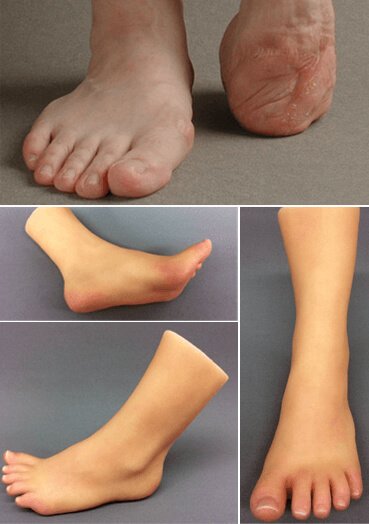
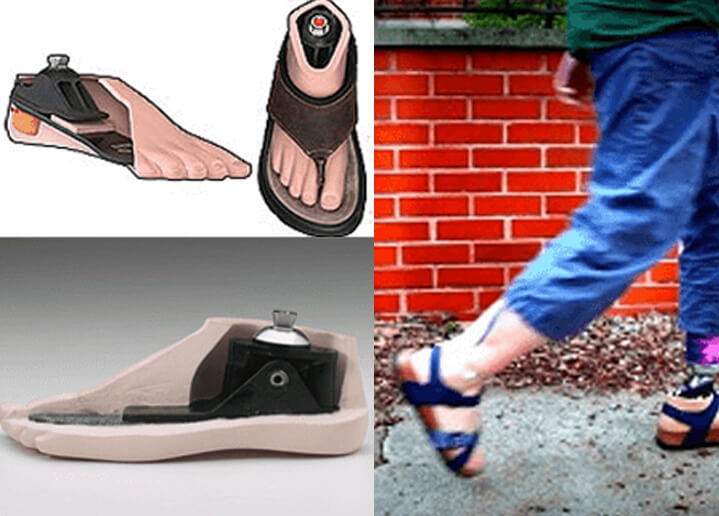
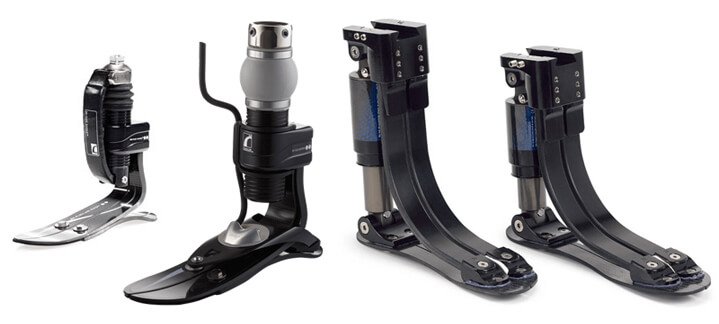
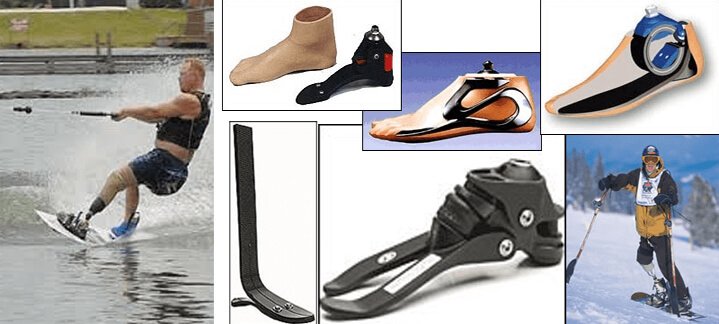
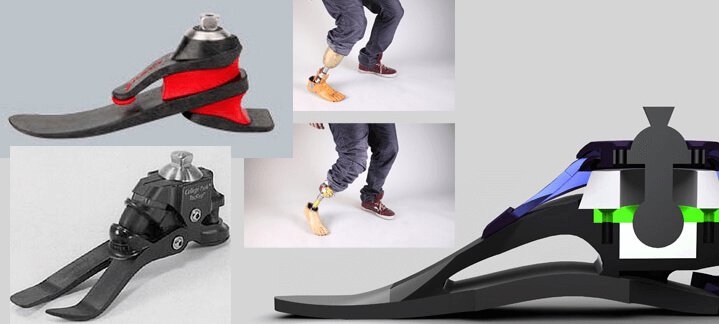
Prosthetic foot design and construction has progressed tremendously in the past few decades and now commonly incorporates carbon fiber structures to reduce weight and improve energy return. Some feet have terrain adapting and shock absorbing features, while others are more suitable for special purposes such as swimming. Most high-end feet can be ‘tuned’ to suit each individual by adjusting or exchanging internal elastomer bumpers or wedges, and are custom ordered from the manufacturer to specifications for each client. Prosthetic feet are selected by considering each individual’s activity level and the type of terrain that they will be traversing. We encourage our clients to become familiar with the different types of prosthetic feet available, to assist in the selection of the most appropriate type for them.
Prosthetic feet, like knees, hips, and other components incorporated into a prosthesis, can be grouped according to a recognized functional level classification system:
- Low Impact Level:Daily activities involving limited and steady walking with the use of a walking AID.
- Moderate Impact Level:Daily activities involving normal walking, with the ability to demonstrate varied cadence.
- High Impact Level:Daily activities involving fast walking, jogging and climbing stairs. Example: Light manual labor, recreational sports.
- Extreme Impact Level:Daily activities involving rigorous walking, running and heavy lifting. Example: Heavy manual labor including lifting, track and field sports.